‘The coconut tree does not sway by itself’: Assessing China’s foreign interference in Sāmoa and its impact
China-linked finance and elite ties are reshaping Sāmoa’s politics—and the Pacific balance.
Sinopsis is a project implemented by the non-profit association AcaMedia z.ú., in scholarly collaboration with the Department of Sinology at Charles University in Prague. It aims to present a regular overview of developments in China and its impacts on the outside world from the perspectives of Czech, Chinese, and international observers.

 Professor Anne-Marie Brady, Sinopsis Non-resident Fellow, Dr Martin Hala, Director of Sinopsis
The South Pacific is at a turning point as it responds to a complex new security environment. The region has been put under intense pressure with a series of escalating traditional and non-traditional security threats: natural disasters, climate change, Covid-19, the oil crisis caused by the Iran War, and the steady encroachment of China’s military and political power into the region. Coastwatchers 2.0 is a preparedness and democracy-strengthening initiative focused on the People’s Republic of China’s (PRC) malign activities in the Pacific. The PRC’s aggressive actions aim to break the US defense line in the Indo-Pacific and cut off the Southwest Pacific. The Chinese government sponsors political interference activities in every state and territory of the Pacific, weakening already fragile political systems. From Kiribati to Vanuatu to French Polynesia, China has repeatedly tried to gain access to militarily significant airfields and ports.
Exactly 70 years ago, the Coastwatchers of World War II played a crucial role in intelligence, reconnaissance, and coalition-building in the Pacific. The Coastwatchers were a group of courageous indigenous peoples and European settlers from more than 60 locations across the Pacific, who partnered with Australian, New Zealand, and US forces to provide a multi-domain defense and resistance network. The Coastwatchers are widely credited as helping to turn the tide of the Pacific war. Prime Minister Winston Churchill famously described the crucial year of 1942, when the allies successfully fought back Japan in Guadalcanal and Germany in North Africa, as “the end of the beginning”. Admiral William F. Halsey, US Navy, said that ‘the Coastwatchers saved Guadalcanal, and Guadalcanal saved the South Pacific’.
In the present day, the Coastwatchers 2.0 project is a democracy-strengthening, capacity-building and preparedness initiative focused on the PRC’s malign activities in the Pacific. The Coastwatchers 2.0 team produces policy-relevant, empirically based research in the form of policy briefs, op-eds, podcasts, and academic papers on the foreign policy choices and challenges of Pacific Island developing states as they face a new security environment and pressures from the PRC. This deepens local and international awareness of Pacific foreign affairs, defence, and strategic interests in the new security environment.
Coastwatchers 2.0 engages with and contributes to the existing literature on Pacific security, China and the Pacific, and China’s global malign activities, partnering Pacific specialists with China experts.
China-linked finance and elite ties are reshaping Sāmoa’s politics—and the Pacific balance.
The Pacific Islands cannot influence the Trump administration’s regional engagement, impacted by cost-cutting and a more fractious international engagement.
China weaponizes Pacific infrastructure to expand regional military influence.
China’s latest missile test sends a clear message: Beijing intends to make its military presence in the Pacific the new normal.
With the warning of a yet-to-materialize missile test in the Southern Ocean, is Russia playing an old joke on New Zealand?
In confronting China’s covert influence campaign, we are betting that transparency is our strongest weapon.
Pacific island states face growing geopolitical rivalry. A collective security framework could give them a stronger voice and greater control over their region’s future.
The newly designed Declaration of Defence and Security between New Zealand and the Cook Islands marks a reset, but not yet a solution.
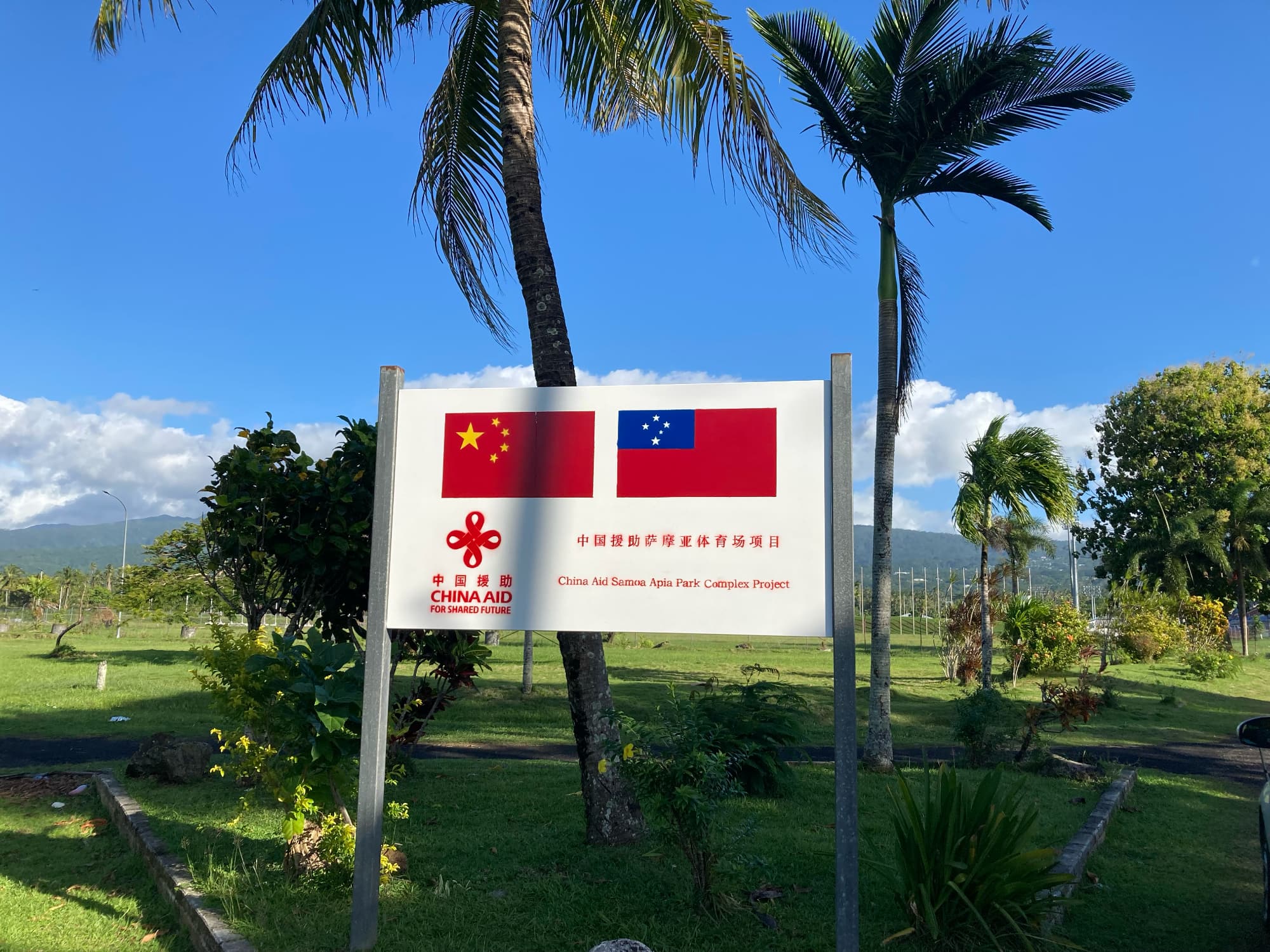
China’s influence operations in Samoa have been patient, persistent, and, as the election proved, profoundly effective.
In the Pacific, infrastructure is influence – but China appears to be alone in recognizing that.
New Zealand’s recent decision to pause nearly $30 million in direct budget support to the Cook Islands is not a punishment. It is a necessary act of accountability.
Former Prime Ministers Helen Clark and John Key attending China’s World War II victory parade risks validating a world view at odds with NZ’s.
Washington’s efforts to rebuild ties with Pacific Island nations risk unraveling as the Trump administration cuts aid, weakens regional engagement and creates new opportunities for China to expand its influence.
China embeds its military ambitions within Pacific Island nations by developing dual-use infrastructure such as ports, wharves, fisheries, aviation hubs, and ICT networks.
The Cook Islands has found itself in the global spotlight recently, and not for reasons that inspire confidence, writes Professor Anne-Marie Brady.
We need a commission of inquiry into police conduct on foreign interference, writes Professor Anne Marie Brady.
The rules-based international order that once underpinned global stability is being vaporised by the ruthless actions of the US, Russia, and China.
The live-fire exercises were a demonstration of China’s growing sea power in Australia and New Zealand’s immediate periphery – and meant to normalize the PLA presence there.
The new China-Cook Islands deal has implications for Pacific security, but particularly for New Zealand, the United States, and Australia.
Developing political literacy on China requires understanding not only Beijing’s policies and ambitions, but also how its growing influence is reshaping political decision-making and public debate in democratic societies.
New Caledonia is the most pressing issue in Pacific security right now. New Caledonia’s future is a black swan risk: waiting in plain sight, yet unknown to most.
China relations expert Professor Anne-Marie Brady examines the subtle but important shifts in NZ’s official attitude towards Xi Jinping’s China.
The China Coast Guard is expanding its reach in the Pacific, part of a broader campaign to increase Beijing’s security role in the region.
Washington must start to shape its own policy on the Solomons, otherwise Campbell’s trip is a fool’s errand.
The alarming news broke that the Solomon Islands is planning to sign a security agreement with the People’s Republic of China, opening the way for a permanent military base and intelligence listening posts.
China is using the recent humanitarian crises in the Pacific to normalise the People’s Liberation Army’s presence in the region.
In the last few weeks, Australian, Fijian, New Zealand and Papua New Guinean peacekeepers were deployed to the Solomon Islands to stabilise the situation for a pro-China leader, alleged to have used a Chinese government slush fund to bribe militants to withdraw support from the violent protests in Honiara.
Questions surround the Chinese consulate’s illegal occupation in French Polynesia.
© 2026 AcaMedia z.ú. | Contact: sinopsis@acamedia.cz